India deal opens migration pathways while dairy stays shut
July 13, 2026
Summarised by Centrist
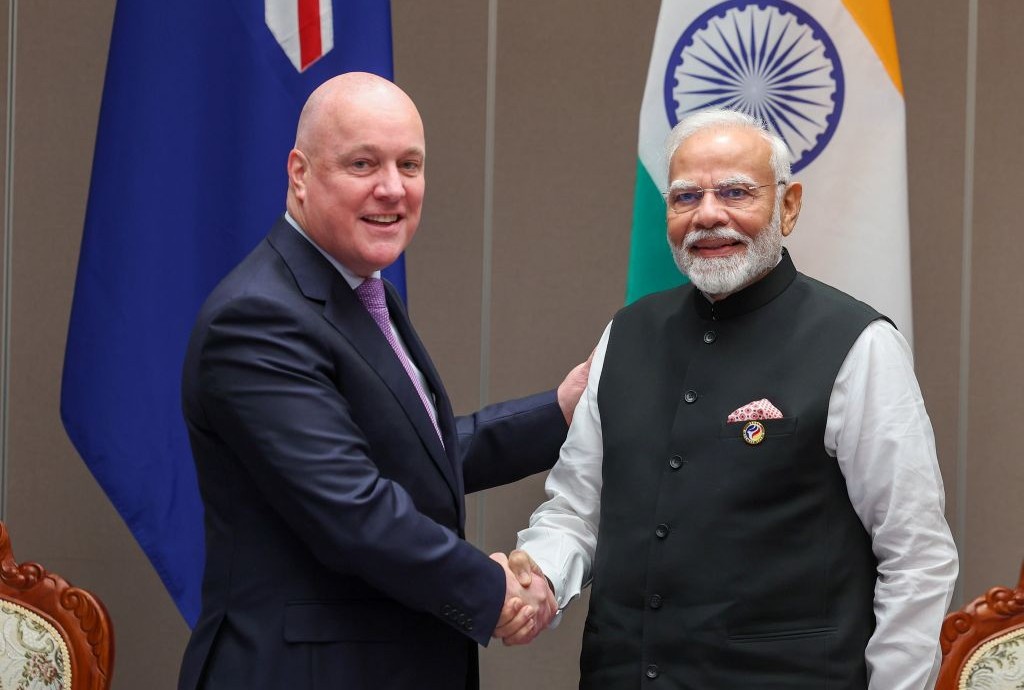
Christopher Luxon has promoted the New Zealand–India Free Trade Agreement as a “landmark achievement” that will reduce trade barriers, expand exports and help lift incomes.
The agreement also contains significant migration provisions and leaves New Zealand’s core dairy exports outside India’s tariff concessions.
Luxon and Indian Prime Minister Narendra Modi have elevated the relationship to a strategic partnership, with a goal of doubling two-way trade by 2030.
Luxon said the agreement would eventually reduce or eliminate tariffs on 95% of New Zealand’s exports to India, opening opportunities in a market of 1.4 billion people.
However, only 57% of New Zealand exports will become tariff-free when the agreement takes effect. New Zealand, meanwhile, will remove all tariffs from Indian imports immediately.
The agreement creates a new Temporary Employment Entry scheme allowing up to 5,000 Indian workers to be present in New Zealand at any one time.
Because the visas last three years, that is equivalent to an average of about 1,667 new visas each year.
MFAT’s National Interest Analysis says the employment provisions were “an important Indian priority in the FTA negotiations”.
MFAT says some provisions “could increase the number of Indian nationals in New Zealand”, particularly through working holidays, contractual service suppliers and the occupations covered by the new employment scheme.
Immigration New Zealand expects the new categories could also produce “some increase in immigration fraud and/or non-compliance, as well as a potential increase in asylum claims”.
India has retained tariffs on New Zealand’s core dairy exports, including milk powder, butter, cheese, cream and milk protein concentrates. Those tariffs range from 30% to 60%.
New Zealand secured duty-free access for bulk infant formula and some high-value dairy preparations, along with an agreement to hold consultations if India later grants core dairy access to a comparable trading partner.
That is not a guarantee that New Zealand will receive equivalent access.
Read more over at The NZ Herald, Stuff, and 1News
Image: MEAphotogallery
Community Discussion
Comment Policy